
Quick Start Guide to Effective Pay-Per-Click (PPC) Advertising
Pay-per-click (PPC) is a form of marketing in which a fee is paid each time an online ad is clicked. Some providers of PPC advertising include Google AdWords, Microsoft Bing Ads, and Yahoo Gemini. With these services, ads are displayed on search engine results pages or third party websites that have joined monetization programs such as Google AdSense.
Is PPC right for you? If so, how can you use it effectively? We've compiled a list of tips to help guide you towards a successful PPC campaign.
Determining if PPC is Right For You
When deciding if PPC is right for your business, consider the following:
- PPC advertising can quickly provide your business with additional exposure to a targeted audience.
- PPC advertising can work well for short terms goals such as bringing attention to sales, specials, and limited time offers.
- PPC advertising can aid in raising brand awareness, but social media may be used to accomplish the same goals for less money.
- PPC campaigns require specific goals and targeted content on your website to be successful.
- PPC gives you greater control than Search Engine Optimization (SEO). With SEO, search rank is dictated by the search engine's algorithm. With PPC, you control the ad content, the keywords to be searched, and the page where visitors land when the ad is clicked.
- PPC campaigns require constant monitoring and adjustments to achieve the best possible return on investment.
- PPC is generally more expensive than SEO in the long run since PPC stops working once you stop paying.
How Much Does PPC Cost?
While the cost per click on PPC campaigns varies between industries, the average cost runs around $1 to $2 per click, but can be as high as $50 or more per click for highly competitive keywords in industries that attract long term or high paying customers, such as legal services.
How Does PPC Work?
In this section we'll use Google AdWords for our example. When you sign up for AdWords, in addition to writing your ad content you must decide which keywords you wish to target. You'll also specify the amount of money you are willing to bid for your ads. AdWords offers several different bidding methods, but with pay-per-click you’ll specify a maximum daily amount that you’re willing to spend. If desired, you can also specify a maximum amount per click.
When someone does a Google search, an auction determines which ads will appear and in what position they will appear. If your ad is eligible and appears in the results, you'll only be charged when someone actually clicks on your ad. The auction to decide which ads will appear is determined by keywords, geographic location, the quality of your ad content, and the amount of money you're willing to spend. This is where PPC campaigns require constant monitoring and adjusting, especially in the beginning stages. You’ll want to keep track of which keywords, ad content, and bid amounts provide you with the greatest return on investment.
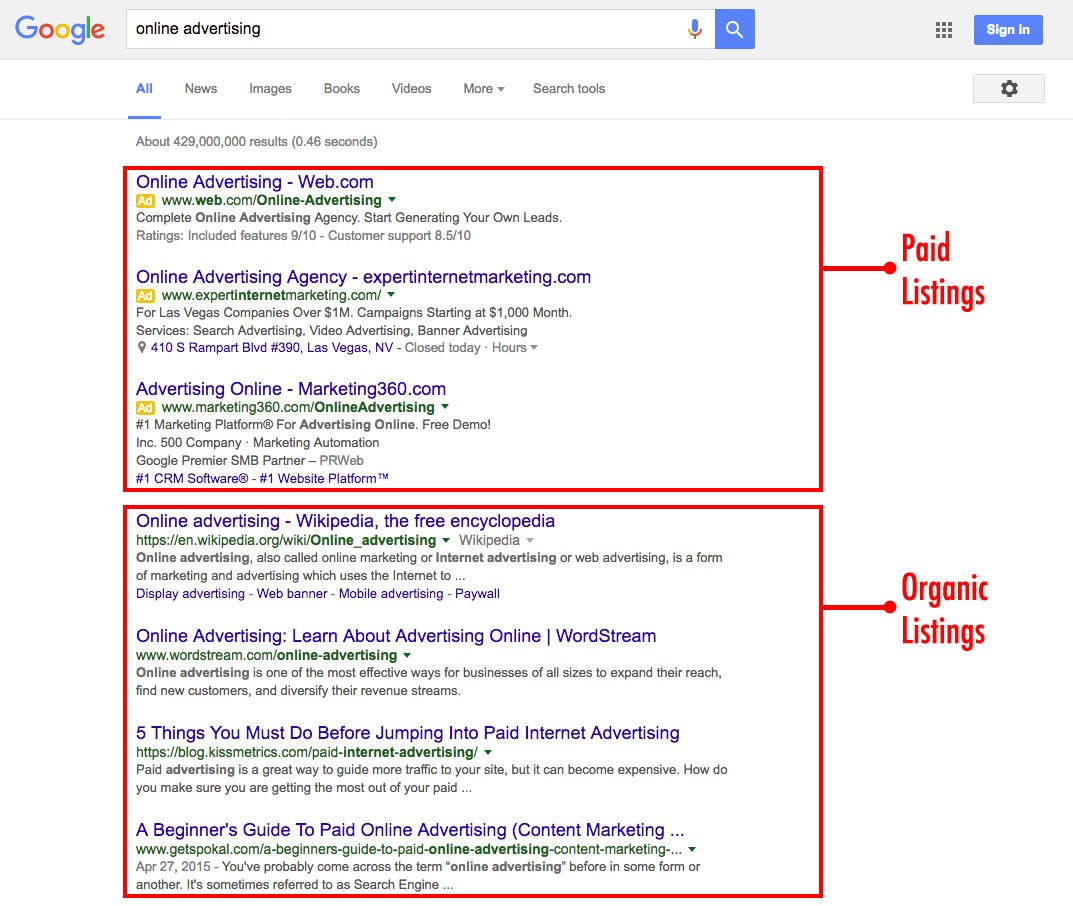
Google displays paid search results above organic search results. Depending on the search term, paid results can also appear next to or below organic results.
Tips For Success
If you decide to take the plunge and try PPC advertising, here are some tips for an effective campaign.
Start With a Low Daily Budget
While cost varies by industry, it often doesn't make sense to spend more than $50 per day when first starting a PPC campaign. You'll need to give yourself time to monitor the campaign and make adjustments based upon which keywords and ad content produce the highest click through rates before ramping up the daily spending limit. Setting too high of a limit early on could turn into an expensive experiment and a waste of money.
Write Good Ad Copy
The space in PPC ads is very limited, so you'll want to write clear, concise ad copy that first and foremost illustrates the benefits of your particular product or service. Your ad should clearly show why people should click your ad instead of your competitor's. Does your product or service offer a solution to a specific problem? Are you offering a special price or discount? State these in your ad.
Tailor Your Ad Content And Landing Page To A Specific Goal
Your PPC advertisements only display for specific keywords, so when a visitor clicks your ad and lands on your website, they'll expect to see content that is specific to the search they performed and the content that appeared in your ad. If your ad features a specific product, then the ad should bring the visitor to that product's page, not to your website's home page.
Include A Clear Call To Action
You want potential customers to take action, so tell them. Consider including a call to action in the ad content, and most definitely include a call to action on your landing page.
Capture Your Visitors
If your business utilizes email marketing, use the landing page as an opportunity to capture your visitor's email address by offering something of value in return for registering for your mailing list. Offer educational, need-to-know information or a special discount or coupon. In the event the visitor does not convert to a paying customer at that moment you'll have future opportunities via future email marketing messages.
Watch The Competition
Do a search for the keywords you plan to target and see what sort of strategies your competitors are using. Put yourself in the shoes of a consumer and identify the strengths and weaknesses of your competitor’s ad content and landing pages, and tailor your strategy to be unique.
Stand Out From The Crowd And Be Specific
Many consumers use search engines to shop around. If they clicked your ad, it’s very likely they will click on your competitor's ads or the organic search results. Your landing page must clearly show people why they should choose you over the competition. It’s not always about having the lowest price, but rather showing how and why you are the expert, or the most experienced and reliable, or the most devoted to providing an excellent customer experience.
Don't Ignore SEO Strategies
Organic, unpaid search results are clicked on far more often than paid advertisements, so don't neglect your search engine optimization efforts when you begin a PPC campaign. PPC is better geared towards short term goals while search engine optimization will have a longer lasting effect.
Other Resources Dedicated to PPC and SEO
Google's Pending (Mobile) Algorithm Change and its Effect on your Website
SEO, I Know: Frustrations of the Beginner
7 Basic Landing Page Essentials for Conversion
A Quick Guide to Improving Conversion Rates of Your Landing Page
The Psychology Behind Achieving Website Conversions
How to Convert Website Visitors into New Customers
6 Reasons Why Your Website Conversion Rates Are So Low
6 Steps for an Effective Call to Action
Increase Your Page Ranking in Google
Do You Really Need SEO and Social Media?
The Secret to SEO... Make It One Louder
The Current State of Search Engine Optimization
All You Need to Know About Search Engine Optimization In Two Concepts
Combined Online and Offline Marketing Efforts Lead to Marketing Campaign Success
Popular Articles
Discovering the Stonk Bin: Your Gateway to Timely Stock Tips from BannerView.com
Seminar Success: From The Back Row
BannerView Press Publishes New Guide Titled Help Wanted: Women to Play College Basketball
Build Brand Awareness Via Youth Sports
.XXX Domains - They're Not Just for What you Think
Categories
Download
 Whitepapers, Infographics, & Quick Guides
What Email Campaign Schedules Generate the Most ROI?
Which Content Marketing Strategies Get the Best ROI?
Which Social Media Marketing Strategies Work Best?
Benefits of a Fully Functional & Optimized Website